


Optical Packaging's Great Transition (Part 6): Beyond Datacom — Why AR microLED and FMCW LiDAR Are Packaging's Other Two Main Axes
Most of the optical packaging story revolves around CPO and the data center, and with good reason — it is the biggest slice of the 2031 market. But look only at datacom and you miss two other races that are just as interesting and just as effective at pushing packaging to the core of the value chain: AR display engines and FMCW LiDAR.
Both markets are a tier smaller than CPO — AR display engines at about $1.4B in 2031, FMCW LiDAR at about $172M — but they push the definition of "packaging" somewhere more radical. AR microLED counts "integrating LEDs onto a CMOS backplane" as packaging; FMCW LiDAR pulls automotive environmental testing and hermetic sealing into the scope of photonics packaging. Neither is datacom packaging in the traditional sense, but both turn packaging from a supporting role into an enabling factor.
This is the series finale. It breaks down these two non-mainstream races and revisits the bigger question posed at the start of the series: why is packaging not just a technology, but the hub of the entire industry narrative?
1. AR Comes in From the Cold: 2026 Is the Real Inflection Point
For the past decade AR has been a market repeatedly written off. Google Glass flopped in 2014, the so-called "AR winter" ran from 2018 to 2022, and only in 2024 did the audio-only Ray-Ban Meta rescue the wearable form factor. But over 2025–2026, the market really is turning.
Key milestones:
2025: Meta launches Ray-Ban Display, the first consumer AR glasses with a built-in LCoS display engine
2026 (expected): Google follows, possibly with a product built with Magic Leap × Raxium
2028 (expected): Apple may enter (speculative); monolithic RGB microLED reaches volume-production maturity
2031 (forecast): AR glasses shipments reach 35M units a year, with China and the U.S. forming two parallel tracks
The AR display engine market is forecast to surge from $20M in 2025 to $1.4B in 2031, a CAGR of about 102%. The largest slice is microLED RGB monolithic display engines ($925M), followed by LED-LCoS ($82M) and microLED RGB X-Cube ($288M).
The real packaging story isn't "how good the display engine looks" — it's "how the LEDs get onto the CMOS backplane."
2. MicroLED Hybridization: A Rare Packaging Battleground Inside the Display Industry
At its core, a microLED microdisplay is an LED array bonded onto a Si CMOS backplane. Each pixel on the backplane corresponds to one micro LED, with the CMOS providing the drive circuitry. In the display industry's traditional definition, this bonding step isn't packaging (display makers usually mean module assembly by packaging), but from a microelectronics perspective it is hybrid integration — which makes microLED the only display technology that requires advanced packaging.
There are two main integration routes:
Post-LED patterning hybridization: the LEDs are singulated and defined first, then bonded to the CMOS. Alignment accuracy requirements are high (every LED must land precisely on its CMOS pixel pad), so both W2W and D2W bonding demand extreme alignment.
Pre-LED patterning hybridization: the whole epi-wafer is bonded to the CMOS first, followed by patterning and interconnect. Alignment requirements are lower (a full-wafer bond rather than per-die alignment), but the back-end process is more complex.
Each route has its backers. Approaches the industry is currently trialing include:
7 × 4-inch epi-wafers bonded on 12-inch CMOS: tiling several small epi wafers onto one large CMOS wafer
8-inch epi on 12-inch CMOS: bonding a single large epi wafer directly, which requires scaling epi to 8 inches but avoids bowing issues
Both are still being trialed; neither is a mature solution for 2D LEDs. Monolithic RGB microLED is microLED's true holy grail — today's solutions aren't monolithic, but three single-color microdisplays combined through a prism (X-Cube), or simply monochromatic green (such as the Vuzix Z100). Monolithic RGB volume production is expected around 2028 — which is also when microLED is likely to truly take the mainstream of AR displays.
3. Packaging Players in the AR Supply Chain
The AR display engine supply chain is completely different from datacom's. The main players:
Role | Representative companies |
MicroLED microdisplays | JBD (Jade Bird Display), Hongshi, Plessey (acquired by Haylo Ventures, with investment from Goertek), Raxium (owned by Google) |
LCoS microdisplays | Avegant, Raontech, Himax, Omnivision |
Display engine assembly (Tier 1) | Goertek, Magic Leap, Rayprus, Foxconn |
Waveguide | Schott (Lumus geometric), Vuzix, Magic Leap |
OEM | Meta, Google, Apple (speculative), and a host of Chinese brands |
Key observations:
Goertek is an underrated critical node. It invests in Plessey, partners with Pegatron on AR components, co-develops with Vuzix and Avegant, and packages the display engine for Meta's Ray-Ban Display — a Tier 1 role spanning both the microLED and LCoS routes. If AR truly takes off, Goertek's role will matter more than any single microdisplay maker's.
Google has made the deepest bet on microLED. It acquired Raxium for $1B in 2022 and keeps investing in Magic Leap; the prototype jointly unveiled by Magic Leap × Google × Raxium in 2025 has been described as "close to industrialization" — meaning Google has already decided which architecture its AR products will use.
Meta is running a dual track: LCoS for the first generation, microLED for the second. Ray-Ban Display uses Omnivision LCoS + Goertek packaging + a Schott Lumus waveguide; the second generation will likely switch to microLED or PIC + LCoS (the Vitrealab × Brillance RGB route).
AR display packaging is, at its core, about "shrinking the optical engine enough to fit inside the temple of a pair of glasses." It's the flip side of the same narrative as CPO's "putting optics right next to the ASIC."
4. FMCW LiDAR: Automotive Grade Takes Packaging Requirements Up a Level
Now to the automotive market. In LiDAR, dToF (direct time-of-flight) is still mainstream — in volume production since 2018, with a firm hold on market share. FMCW (frequency-modulated continuous-wave) is a relatively young contender, but it has several structural advantages that make it worth tracking:
It measures distance and velocity simultaneously (FMCW is inherently coherent detection)
It can be mass-produced on SiPh platforms, with potential for lower cost than dToF
Strong interference immunity: multiple vehicles running FMCW at the same time don't interfere with each other
FMCW LiDAR is expected to enter vehicles in volume from 2028, reaching 700k units by 2031. The corresponding photonics packaging revenue is about $172M — not a big number, but packaging accounts for about 40% of total FMCW LiDAR cost, well above datacom's 25%.
Why so high? Automotive qualification. The datacom packaging environment is relatively friendly — temperature-controlled data centers, no vibration, low humidity. The automotive environment is completely different:
Hermetic packaging must resist moisture ingress, preventing water vapor from accelerating degradation of the SiPh chip
Stringent environmental testing: repeated thermal cycling from -40°C to +85°C, vibration, and shock
Long lifetime requirements: automotive components often must be guaranteed for 10+ years, far beyond datacom's 5-year replacement cycle
Functional safety: standards such as ISO 26262 fully define packaging reliability requirements
Major FMCW LiDAR players:
SiLC Technologies: highly integrated single-chip FMCW LiDAR; working with Hokuyo Automatic on 4D LiDAR for industrial automation; received investment from Honda Xcelerator Ventures in 2024

Voyant Photonics: unveiled its Carbon FMCW LiDAR platform, a chip-scale 4D sensor, in 2025
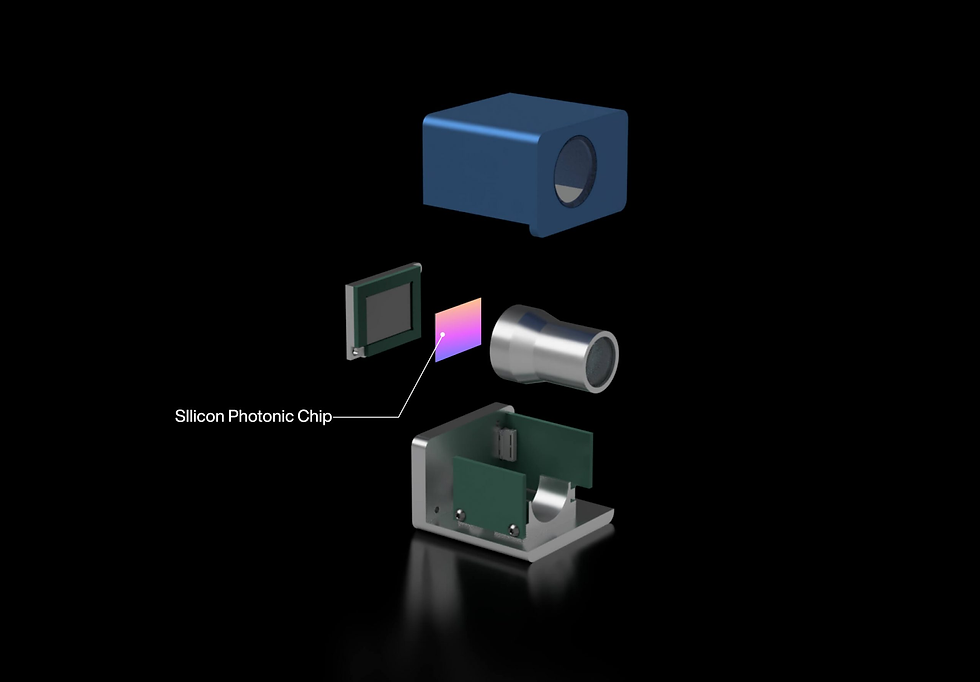
Scantinel Photonics: its key IP and engineering team were acquired by MicroVision in 2024
Aeva: its Atlas 4D FMCW LiDAR was selected by Daimler Truck for the Freightliner Cascadia autonomous truck
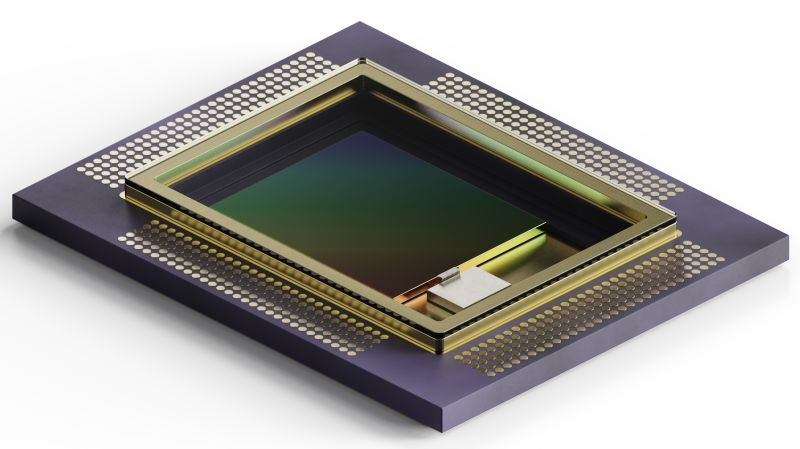
dToF brought LiDAR into the car market; FMCW will bring SiPh into the car market.
5. What AR + LiDAR Mean for the Packaging Industry Long Term
Put AR microLED and FMCW LiDAR alongside datacom and a bigger pattern emerges: the optical packaging industry is shifting from "dominated by one application" to "multiple applications in parallel".
Packaging suppliers' customer mix over the past decade:
90%+ from datacom / telecom optical transceivers
Revenue swinging with hyperscaler capex
Extremely high customer concentration (top 5 take 70%+ of the market)
Over the next decade the structure will diversify:
Datacom (including CPO) remains the biggest slice, but its share may fall from 90% to 80%
AR display engines come in, with customers like Meta, Google, Apple, and Chinese brands — no overlap with hyperscalers
FMCW LiDAR comes in, with automotive customers (Daimler, Honda, Toyota, etc.) — yet another group
For OSATs and packaging suppliers, this means three things:
Customer diversification lowers single-point risk: no longer a bet on the hyperscaler capex cycle
Processes must stretch: automotive-grade hermetic packaging, microLED hybridization, laser alignment accuracy — none of this is existing datacom know-how
There is room for new niche players: Europe still has a foothold in quantum, AR, and defense (EV Group, FiconTEC, Nanoscribe, etc.), while Taiwanese companies' home turf remains datacom
6. Quantum Is the Long-Term Wildcard
A word on another axis the series didn't cover in depth — quantum.
Quantum computing's packaging bottlenecks are unlike anything discussed above. For photonic quantum computers, fiber coupling loss must approach zero — each photon carries a qubit, and once it's lost, it's gone. For trapped-ion or cold-atom systems, extremely dense laser alignment is needed to control particle arrays. Photonics packaging becomes the hidden bottleneck that determines qubit scalability.
Main players:
PsiQuantum: working with GlobalFoundries to put photonic qubits into a commercial CMOS foundry; unveiled its Omega manufacturable photonic quantum computing chipset in 2025
IonQ: announced a $1.8B acquisition of SkyWater in 2025, integrating semiconductor manufacturing and packaging to build a vertically integrated quantum supply chain
Pasqal, Quandela, Xanadu: quantum players from Europe and Canada
Quantum won't generate large-scale photonics packaging revenue before 2031 (market estimates still put quantum computing in the single-digit billions of dollars by 2031), but it will be the next decade's wildcard. If photonic-based quantum truly industrializes, packaging will be the enabling factor.
7. Series Wrap-Up: Packaging Is No Longer Just Technology
All six parts of this series approach the same theme from different angles: optical packaging is moving from a behind-the-scenes assembly industry to the core of the value chain.
Part 1 set out the big picture: $4.5B → $14.4B, a 21.4% CAGR, with three new races opening at once
Part 2 broke down CPO's three-stage evolution: scale-out moves first, scale-up is the endgame
Part 3 compared the TSMC, ASE, and Intel platforms: the standards battle has just begun
Part 4 covered the SiPh interposer route: the next paradigm Marvell and Lightmatter are betting on
Part 5 examined detachable connectors: the hidden gating factor for CPO volume production
Part 6 looked at AR microLED and FMCW LiDAR: packaging stories from the non-datacom races
Over the next decade, if you follow optical communications, AI infrastructure, or the semiconductor supply chain, packaging is an axis you must keep tracking. It affects not just "who wins the orders," but the restructuring of power across the entire value chain — from fab to OSAT, fabless to hyperscaler, the U.S. to Taiwan to Europe, datacom to AR to automotive. Every player's ranking in every chain will be reshuffled as packaging standards are established.


Comments